Showing posts with label books. Show all posts

Monday, November 1, 2010

Other Peoples' Food and Indy Pictures

On Thursday, my first day at my newest job, I ate alone in the little kitchen downstairs. I'm not sure where everyone else spent the meal. I wasn't really concerned with them. I was more worried about how much I'd forgotten over the past few years and whether I could remember enough about law to do a halfway decent job as a clerk.

Thursday night was the last farmers' market of the year in my little town. I didn't stop by. I knew I was going out of town for the weekend, and still hadn't used the tomatoes or beets I'd picked up the week before. I should have gone to talk to the guy about the turkey, but I secured a different turkey from Jordandal Farms in Madison after my last post. My (approximately) 15 lb Thanksgiving turkey will be ready for me - fresh - on the Tuesday before Thanksgiving. That's excellent news because I don't really have room for a fifteen pound bird in my freezer right now. And I won't have to worry about thawing time!

We spent the weekend in Indianapolis with my sister, for my niece's baptism. On Saturday we went to the Children's Museum, where my husband had gone with his grandparents as a child.
The water clock was not working - which was a bummer, because it was the only part of the museum Michael remembered.
Adele was a dinosaur sitting on eggs in the Dinosphere.
Then she was a polar bear.
And and Adelie Penguin!
We went swimming at the hotel pool with Grandma and Grandpa. Adele loves her ballerina tutu swimming suit.
Anna is just an all-around content baby (very different from her sister at this age!) although she didn't like dipping her feet in the pool.
Adele did! But she didn't fuss at all when it was time to go home. What a big girl!
Anna was all dolled up twice on Halloween - once in her baptismal dress, then again as Raggedy Ann for trick-or-treating (although I couldn't stick around for that).
Adele wore her new purple dress to church, and got to sit between her Grandma and her Memaw - what a lucky little girl!

We went out for a fancy dinner on Saturday night - and not just by a two-year-old's definition. I looked at the menu and pondered my choices. Not just because they all looked yummy. On the surface, they did all look yummy. I really wanted the chicken Marsala. My sister found the restaurant's menu online so we'd perused the options before actually arriving at the restaurant. One of the evening's specials, some kind of beef medallions, also sounded good. I kind of thought I should get the beef, since I have been disappointed by mediocre chicken Marsala at other times. But I didn't really want the beef either, because it made me think of feedlots.

I don't cook a lot of beef at home. In fact, I don't really cook all that much meat. I spent several years of my life as a vegetarian - for a number of reasons (all my friends were doing it, it was the environmental thing to do, my uncle raised cows and it made me sad to think about slaughtering animals) but have started eating meat again.

Saturday night I wanted to find a vegetarian option on the menu, because as I tried to make up my mind between chicken Marsala and beef medallions, all I could think about were CAFOs and the inhumane conditions these poor animals endured, just so that they could end up as a cheap commodity on the way to my overpriced plate. As far as I could tell, there were no vegetarian entree options. I could have ordered a salad without meat, but that would have been one heck of an expensive plate of California iceberg lettuce.

I went with the beef. I'm not sure why. Maybe because I have not read of cows having their tails cut off like pigs, or their beaks (okay, noses) snipped off like chickens. Not that the life of a feedlot cow (or steer) is anything to write home about. While we waited for the entrees to come, I seriously contemplated returning to a vegetarian lifestyle.

But I like meat. I especially like meat that has been raised in a humane and environmentally responsible manner. I think I can have a better impact on the world by choosing to eat GOOD meat than by avoiding meat and dairy products altogether. By giving my business to farmers who put the interests of the land and the animals before the almighty dollar, I can make a statement about how I think our resources should be used.

(By the way, I am reading a really good book right now - The Worst Hard Time by Timothy Egan, about the Dust Bowl and how the American government had encouraged people to farm the Great Plains, providing incentives for farmers to cut down the native grasses and plant commodity crops - corn and wheat - that could not hold the soil in place when the drought came and the winds whipped the earth clear across the continent - which is interesting companion reading to what Michael Pollan and Eric Schlosser and Barbara Kingsolver, among others, have to say about conventional farming methods today. And speaking of books, I requested a copy of Nourishing Traditions by Sally Fallon at my library today.)

After the baptism, we enjoyed lunch at my sister's house - chopped California vegetables, barbeque sandwiches made with plenty of high fructose corn syrup, preservatives, and artificial flavorings, and my mom's famous cheese dip (which I had made for the first time just after midnight, after we picked my younger sister up at the airport) made with a blend of two different processed cheese products and some spices. My brother-in-law's parents made a "homemade" pumpkin cake - which was good, but had been made with canned pumpkin.

My nieces' paternal grandparents always make beautifully decorated cakes for special events like baptisms, but before this year I had not put a lot of thought into the word "homemade." A year and a half ago, before Animal, Vegetable, Miracle caught my eye in a small local bookstore, I would have considered canned pumpkin to be a perfectly legitimate ingredient in fall recipes. And since there was no box of cake mix involved in this cross-shaped novelty, I would have thought it was really something special.

All I could think of when my mom asked if I'd tried a piece of the "real, homemade pumpkin cake" was "That's not real food. It's made from a can of hubbard squash labeled as pumpkin because consumers don't know the difference." This was probably not a very kind thought. It's the kind of snobby "foodie" thought that gives the real food movement a bad name. But I don't really care. I'm not going to buy any canned pumpkin for my holiday cooking. I'd rather be labeled a snob than buy into (literally and figuratively) the conventional food system in the US. I still have two pumpkins from my garden and one pumpkin from the CSA in my kitchen, waiting to be roasted and pureed, and turned into something yummy. Something real. My sister had tried to explain my beliefs about food to her mother-in-law earlier in the weekend, because three consecutive cooking shows came on her public television channel as we vegged out while the little girls napped. The America's Test Kitchen show made some kind of pasta with several tomato ingredients that come out of tin cans sold in ounces that do not correspond to the size of Ball Canning Jars. (Gee, do you think they do that on purpose?) My sister must have seen me roll my eyes at the third can of tomato product the chef poured into the bowl. But there was no sneer in her voice when she tried to explain my crazy liberal food ideas to her mother-in-law, bless her heart.

I wasn't even going to bother. My beliefs about food are kind of complicated, and, in case you haven't figured this out yet, I can be a little long-winded at times. (My boss is going to realize this out as soon as he glances at the memo I wrote him this afternoon.) I often don't go into them with people because I don't even know where to start.

My mother-in-law has many inherent real-food beliefs, and if I could just form my wildly swirling food thoughts into a coherent paragraph or two we could probably have a discussion about why making chicken soup from scratch from pastured chickens is important . . . if only I could move beyond "the cornfields. They're too big. They're unnatural. They're destroying our country. Corn is the enemy. It's in everything" she and I could probably have a really interesting conversation. Since I can't seem to summarize the evils of corn in one or two sentences in order to move along in our dialogue about real food, I just loaned my mother-in-law Michael Pollan's Food Rules. She read it, but we didn't have a chance to talk much about it. I think I should have loaned her In Defense of Food first, but it's a bigger book and it doesn't fit in my purse.

At work today, I heated a container of homemade chicken and wild rice soup for lunch. The soup was old - from the batch I made last week - but it was still good. I had an apple and a homemade roll to eat with it but I saved them for an afternoon snack. My boss was eating a grilled cheese sandwich when I arrived in the kitchen. His daughter heated up a package of rice-a-roni macaroni and cheese to share with her dad, who also had a container of peach yogurt. One of the support staff ladies had a chicken and broccoli hot pocket for her lunch. Another support staff lady (I'm still trying to figure out exactly what everyone does around there) ate an apple and a bowl of Kraft easy mac.

We had a discussion about the hot pocket. My coworker was eating it because she had bought them for her daughter, who, as it turns out, doesn't like them. My boss noted that none of our lunches were particularly appetizing, with the exception of my homemade chicken soup, which made him a little bit jealous. I was glad he recognized the superiority of my soup.

What he probably didn't know about my soup is that, except for the celery which came in a Dole bag from California, my soup was actually a political statement in the guise of a yummy meal. My soup stands for the proposition that the best food comes from real people, who only take cash or checks, not credit. With the exception of the celery, which is more of a personal shortcoming, my soup stands for the notion that food should not travel on interstate highways or railroads. The roll that I saved for a snack embodies the philosophy that food tastes better if you have to roll up your sleeves, work hard, and be patient before you can eat.

At the grocery store on my way home (I ran out of flour making rolls last week . . . literally ran out, while trying to knead dough that was too sticky) I picked up some heavy cream and cheese, thinking I could make some real macaroni and cheese for dinner this week. I've never made it before, and didn't know what ingredients I would need, but I figured cream would be good. My Betty Crocker recipe doesn't call for it, but I might sneak some in anyway.

I've been thinking a lot about food recently, but something that is starting to worry me is the upcoming winter. I have a few quart jars of applesauce, a couple of quart jars each of spaghetti sauce and tomatoes, and a couple of pint jars of pickles left, along with frozen soup, frozen veggies, and a few frozen berries. I am probably going to have to start relying more on the grocery store for my meals. I know there is an indoor farmers' market in Madison for most of the fall/winter, and our CSA has an online store where we can order produce to pick up on Sundays, but the hardest part about eating "locally" for me has been finding times to go to these relatively far-away pick-up points. I clipped an article from the paper recently about local organic meat that can be ordered online, and I know I can still get eggs from my CSA farmer.

But the opening of the Portage Farmers' Market in May of 2011 is a long way away.

Wednesday, September 15, 2010

Agribusiness and Advertising

Today I read a disturbing article in my hometown newspaper. It was written by an Associated Press writer, so maybe you read it too, in your neck of the woods. It was about corn refiners and their desire to get away from the negative connotations of the ingredient they make called "high fructose corn syrup." They want to change the name officially - and have already been using a new name. "Corn Sugar." I think you can read the article here. In case my link doesn't work (I don't know how long news stories stay in this database) here are some highlights:

The makers of high fructose corn syrup want to sweeten its image with a new name: corn sugar.

The Corn Refiners Association applied Tuesday to the federal government for permission to use the name on food labels. The group hopes a new name will ease confusion about the sweetener, which is used in soft drinks, bread, cereal and other products.

Where is Shakespeare when you need him? I realize that the Corn Refiners Association is facing serious pressure from people like me and her and her and him and these guys (check the blog on Fridays to see the Food Product of the Week)- not to mention him and her, who (for some of us) brought these issues to our attention in the first place. The ('poor' but actually quite well-subsidized) Corn Refiners are stuck between a rock candy and a hard candy. They make a refined food product grown in monocultures sustained only by the dumping of chemical fertilizers into the ground, and we don't want to buy it anymore. Literally. But a corn-based sweetener by any other name is going to . . . well, taste the same. Yet they think Americans are dumb enough to buy this name change. Figuratively, this time. Well, literally too.

But to say that they are changing the name of this food-like substance in order to "ease confusion" is ridiculous. I suppose I should be careful what I say about this, as I'm liable to get caught in some veggie libel laws over my disgust with (both my own craving for and the industry's production of) corn byproducts. (Why don't they call it a corn byproduct? Wouldn't that make it pretty straightforward for consumers?)

There are two things going on here. First, the corn industry wants to get away from HFCS because by now most Americans have heard that HFCS is bad. Of course, the issue for a few of us is not whether HFCS is more bad for us than regular sugar. The issue is that people buy bread and pasta and potato chips and all kinds of foods that they would not expect to find sugar in, and see HFCS listed as one of (the first!) ingredients. For many years, HFCS could hide behind its mysterious (but mostly pronounce-able) name. No one understood what High Fructose Corn Syrup was. It sounded like a vegetable. It was not clear that HFCS was just a cheap alternative to sugar, and a highly government-subsidized one at that. So most of us know what HFCS means. And some people are starting to react.

Parents such as Joan Leib scan ingredient labels and will not buy anything with it. The mother of two in Somerville, Mass., has been avoiding the sweetener for about a year to reduce sweeteners in her family's diet. "I found it in things that you would never think needed it, or should have it," said Leib, 36. "I found it in jars of pickles, in English muffins and bread. Why do we need extra sweeteners?" Many companies are responding by removing it from their products. Last month, Sara Lee switched to sugar in two of its breads. Gatorade, Snapple and Hunt's Ketchup very publicly switched to sugar in the past two years.

The companies that are are replacing HFCS with sugar are not doing anyone any favors! (Okay, sugar cane farmers are probably happy.) They should be working to reduce the overall sugar content of the foods rather than substituting one type of sugar for another. (For what it is worth, we know that growing miles and miles of corn in monoculture is bad for the environment, but let's get real, people. Cane sugar is grown the same way. And sugar growers in the US are subsidized too, albeit differently from the corn growers.) We need to get away from our dependence on cheap sugar.

My last post is a perfect example of how processed corn has made Americans change our diets over the last century because of a steady supply of cheap fructose. Have you noticed how much honey and maple syrup cost?? When I finally get to a point where I am using only local sweeteners, I am going to have to get used to eating a LOT fewer sweets. I paid $14 for a quart of Maple Syrup from my CSA, and this was a bargain - in the same area my dad paid $19 at a Farmers' Market for a quart of syrup. And maple syrup is not quite as sweet as table sugar, so you need to use more of it to achieve the desired sweetness. (I haven't looked into maple sugar, but I probably will at some point in the future.) Honey is not cheap either, although you can actually substitute 2/3 cup of honey for 1 cup of sugar. I think I paid about $20 for 80 ounces (10 cups) of local honey at our grocery store. Organic and gourmet honeys cost more.

But I have digressed. The other thing that the Corn Refiners are doing is that they are taking advantage of people like me and the bloggers/writers I mentioned above. (Except for the fact that the people they're actually going to reach are less perceptive - or more busy - or less interested in food - than me.) They are preying on the innocent, slightly health-conscious, public. They are going to call their product "corn sugar" and consumers are going to eat it up. Literally. And also figuratively. If all they needed was to get away from the negative associations with HFCS, they could pick a different name. I suggested "corn byproduct" or they could even go with "very sweet corn byproduct" but obviously they're not going to do that. They picked the innocent sounding "corn sugar." "Corn sugar" is like the "real food" campaigns being touted by fast food restaurants. Corn and Sugar are normal words that fourth-graders can pronounce. They are words that your great-grandmother would recognize. Of course, she would recognize them as two different things entirely, but she would have a mental image of "corn" and "sugar." She would have them in her kitchen. So "corn sugar" must be a good thing, right? There is nothing we can do to keep fast food chains and agribusiness stop taking advantage of consumer ignorance, except to keep ourselves educated and try to stay one step ahead of them.

The fast food industry, and now the Corn Refiners, are onto us. So we have to get smarter. We need to move beyond the Food Rules (some of which I referenced above and would/should cite, but my book is at my mother-in-law's house) and think even more deeply and carefully about our food choices.

Since I certainly don't want to eat any more sugar right now, perhaps I'll just eat my words. The attitude we have to have (and that I will try harder to have at all times going forward) is that, just because your ginger root came from Thailand and there is no way to justify your home brew as local, it is still important not to cave in to not corporate interests. Each time we choose an item - whether it is a 15 oz can of pumpkin (I've been reading a lot of those recipes lately) or a basil leaf or a ginger root - we have a choice. We can know with 100% certainty where it came from (my backyard, my CSA, my farmer's market) or we can trust corporate America to make that choice for us. I recognize that not every person can buy locally for every meal, or even for one meal a day. (My sister continually points out that there are people who live in New York City and Chicago who don't have yards. I know this. I do. I am a renter. My garden is an hour away from my back yard.) But it is up to us to take the first step. For me, that step was not buying bread at the store. I didn't think HFCS belonged in my 100% whole wheat bread. So I don't put it in the bread I make. Calling it corn sugar is not going to change my mind. I hope you won't let it change yours.

For more puffery and pseudo-science:
Check out the Corn Refiners Association:
This is a list of all the great things corn syrup does for foods that are not sweet - like spaghetti sauce. Apparently it is a preservative. (Score for the Food Rules. Bugs don't want to eat HFCS. Neither should you.)

If it wasn't obvious, I'm not receiving any money from Wendy's for linking you to their ads. Remember folks, Fast Food can't fake fresh.

Here is an interview with the head chef of McDonalds (from their website). He talks about simplicity, and recalls the best apple he ever ate - plucked right out of a tree in an apple orchard. Then he discusses how his goal is to make the freshest food available to his customers. (Anywhere in the world, in any climate, any season, any time of day. Or night.) As a teaser, here is his answer to the question "What is your long-term goal for the McDonalds menu?" he replied, "To stay relevant. And to change people's perceptions about our food not being real. I want people to know that there are a lot of dedicated, passionate professional people out there who think about that menu every single day."

For the other side of the story, be sure to check out Michael Pollan's In Defense of Food and Barbara Kingsolver's Animal, Vegetable, Miracle.

Note: I apologize for formatting problems. I spent several hours putting this post together, and discovered that while Blogger let me type from 7:48 p.m. until 11:26 p.m. it was stuck "saving" the post at 7:48 and I would have lost the whole thing if I hadn't copied the post into a Word document. Most of the formatting was preserved, but the quotation marks I put around the italicized portions taken from the newspaper article, the McDonalds quote, and the Corn Refiners page looked goofy so I tried to take them out. If it is in italics, it is either a quotation or the name of a book. I trust that you can figure out which.

Tuesday, August 10, 2010

Catching Up

Karen and Anna Kate at Circus World Museum.

Since I wrote my last post, I got a new very part-time, seasonal job as an interpretive guide at a local museum here in town. I also went to Indiana to visit Uncle Fred and see some darling little girls. And I have spent some quality time in the garden and kitchen, of course.

My dad and I planted fall crops of beets, beans, carrots, peas, and some lettuce, which I think I already posted. The beets and beans are definitely growing. I'm not sure where my dad planted the lettuce - that's his domain. I will check on the garden later this week and hopefully I will see some carrot and pea sprouts. I'm afraid it might be too hot for them, with temperatures in the high 80s and a heat index close to 100!

While I'm waiting for the new seeds to grow, I have still been hauling in zucchini and cucumbers, and the tomatoes are getting serious about producing too. I'm not sure whether I posted that we harvested the onions or not. They are drying on an old screen window in the garage. We pulled about 60 of them. I had already eaten about 10. Next summer I hope to plant more. 60 onions won't get us very far. I have already had to buy onions at farmers' markets a few times this summer. (Back before I read Animal, Vegetable, Miracle, I liked to keep a couple of bags of frozen diced onions on hand because, like garlic, it is often hard for me to get by in the kitchen without them.) I still need to find a place in my house to store onions for the winter.

On Monday at work, the groundskeeper at the museum told me his wife was canning green beans. We swapped zucchini bread recipes, and talked about pickles. We had gotten a jar of pickles from some friends the previous Wednesday. They are refrigerator pickles, no cooking or canning required, and our friends had forwarded me the recipe. I had several pounds of cucumbers i my fridge and I finally worked up the courage to make pickles. I went to the store for jars after realizing I did not have enough containers in my house for all of my soon-to-be pickles. I also needed pickling salt and a few spices.

I ended up making 3 pints of sweet pickles (sorry I did not take a picture) and 6 pints of dill pickles. On the advice of our friends, I did not add as many hot pepper flakes to my dill pickles as the recipe called for. I also skimped on the dill seed in two of the jars, because I was running low. The sweet pickles were ready after 2 days, but the dill pickles had to be shaken once a day for a week before they were ready. I am planning to make another batch of both types of pickles soon, although we much prefer the sweet pickles. I am going to experiment with the dill recipe, maybe combining some other recipes I find online.

jars of cucumbers waiting for brine.

That night I also sauteed a huge zucchini for our dinner, served with caprese salad. I also made two loaves of zucchini bread. Instead of using my fancy recipe with yogurt and a lot of ingredients, I went with Betty Crocker. I'm not sure why the recipe calls for oil instead of butter, and I might have to experiment with that next time, but the bread was very good and much simpler to make, and calls for either white or whole wheat flour, instead of a blend of both.
Busy countertop.

Last week I also took a friend to the farmers' market. She lives conveniently right down the street from a market that is open on Wednesdays and Saturdays, which is very handy! But she hadn't been to the farmers' market in years, and was understandably a little bit overwhelmed with the new type of shopping experience. She came prepared with cash and reusable bags, but shopping at the farmers' market can be very different from shopping at the grocery store. For instance, a vendor may advertise tomatoes for $2.00 a pound - but how does one know how much a pound of tomatoes is? At the grocery store, there are hanging scales that customers can use themselves to weigh produce. But at a stall at the farmers' market, sometimes the scale is behind the table, and only the vendor can reach it. Maybe you see three really nice-looking tomatoes, but are unsure of how much they weigh. Do you pick them up and hand them to the vendor to be weighed, and then gasp in shock and horror when you are told that your three plump, rosy tomatoes will be $9.00? At that point, do you hand over the money, or retract your offer? When vendors have green beans separated into little plastic baskets and the vendor asks whether you want a bag, should you be green and suggest the vendor just pour the whole basket into your reusable nylon bag, or should you let the vendor put the beans in a plastic bag so that they are protected from the rest of your produce? Do you pick your own leeks or do you let the vendor choose? (At this particular market, one farmer's wife loves to pick sweet corn for her customers. She also shucks it for no additional charge. Other vendors are more inclined to let you choose your own and shuck it at home.)

Fortunately, as I was able to remind my friend, the vendors are people too. I think they know that not every customer is well-versed in shopping at the farmers' market, and they are there to help! If you don't know how many mini cucumbers make up half a pound (the amount you've chosen because it is what you want to spend), just ask. I think most vendors will be happy to either give you a verbal estimate, or to actually put the produce on the scale. And if you're waffling about a purchase because you really don't know how to tell whether a melon is ripe, the vendor might give you a taste!

We had a very good day at the market, except that I got so excited about buying a cantaloupe that I forgot to pick up an eggplant, and had to make ratatouille with 2 lbs of zucchini and summer squash instead of one pound of zucchini and one pound of eggplant. It still tasted really good. (Sorry, no pictures.)

Partial haul from Wednesday. Corn, tomatoes, zucchini and cucumbers (not pictured) from the garden. Cantaloupe and onions from the farmer's market. The cucumbers and yellow squash in the background are from our CSA.

I had a busy night in the kitchen on Wednesday night. After visiting the farmers' market and working in the garden for a few hours (and freezing tomato sauce with my mom!) I picked up our CSA share and got right to work. I missed my book club, which was okay because I hadn't read the book. (The Book Thief by Marcus Zusak. I noticed that one of the bloggers I read lists this as the book she is currently reading.) I couldn't get into the book after about the first 6 pages, and loaned it to my sister. (I read the first page aloud to her, exasperatedly wondered how anyone could read this, and was shocked to hear her say it sounded interesting. Later, I told my neighbor about this book I couldn't get into. She asked what it was. I told her. She called to her husband, "Katie says she doesn't like Elizabeth's friend's book. Can you believe it?" "Elizabeth" would be Elizabeth Eulberg, my neighbor's daughter, the publicist for the Twilight Saga, and author of The Lonely Hearts Club. Apparently Markus Zusak is a personal friend. Maybe I'll try to read it again when I get it back from my sister.)


Instead of hanging out in a book store, having good conversations with interesting people, I hung out in the kitchen alone, and made salsa. I had never made salsa before,* but we got fresh cilantro from the CSA and I had plenty of tomatoes, so it seemed like a logical thing to make. (I can't really remember what we had for dinner, but it was probably zucchini sauteed in olive oil with a clove or two of garlic thrown in at the end, seasoned with a little salt and fresh cracked pepper. I top mine with feta cheese and my sweetie puts shredded farmer's cheese on his.) I love salsa with mango in it, but have no access to mangoes, so I improvised with part of my cantaloupe instead. I diced some melon, chopped a bunch of cilantro, threw in the raw corn from my garden (which my parents said is not that great on its own, but it worked very well in the salsa), and a few squirts of lemon juice. I also added green onions from our CSA, and a few dashes of black and white pepper. I did not have any hot peppers in the house, but thought the salsa needed a little zing.

* In hindsight, I realized that this is not strictly true. I made salsa once in 7th or 8th grade at school in Spanish class. Senorita Speaks gave us the recipe and I tried it at home with my mom. I don't recall any of the ingredients. I do remember that it was a LOT of work, and I think it made several gallons of salsa, of which we ate maybe a couple of chip-fulls each.
We didn't have any tortilla chips in the house, but quickly remedied that on Thursday, and the salsa disappeared over the weekend.

In addition to bringing home lots of fresh produce on Wednesday, I also bought a water bath canner, a jar lifter, and other various canning supplies. I've been waffling back and forth about whether or not to can tomato sauce, or just freeze it this summer. Honestly, I'm a little bit scared of canning, which is strange because I grew up eating my grandma's canned pears and maybe peaches, canned jelly, pickled beets, bread and butter pickles, and lots and lots of canned tomato sauce, which, as my mother likes to say, has never killed anybody yet. Watching experienced grown-ups can, and contemplating actually doing it myself are two entirely different things. I read about people canning. I just found a new blog where a homeschooling mother of four cans a lot of different vegetables (and salsas). She makes it sound so easy. Her 10 year old son did some canning for a project for 4H at the county fair. Then I read things like, "old cookbooks are really neat to look at but don't you dare use the canning recipes in them because those people didn't know what they were doing, and didn't know what botulism was" which concerns me because the recipe in my kitchen for pickled beets (which my dad used last summer with great results) is from my grandmother. Heaven only knows who or where she got it from. Barbara Kingsolver gives a great-sounding recipe for tomato sauce in Animal, Vegetable, Miracle, which calls for a cup of dried basil. I would like to replace this with fresh basil, but she warns against changing any ingredients or adding fresh herbs/spices because you might change the pH of the sauce, and render it deadly. The homeschooling lady offers a tomato puree recipe and breezily advises the home canner to, "throw in a couple of fresh basil leaves for added flavor." Yikes. (It is safe to assume the homeschooling lady has not killed anyone yet either, right? - I will try to add her to my list of blogs I read soon) (One reassuring thing is that this homeschooling lady uses the Ball Blue Book of Preserving, which my mom bought for my dad and me earlier this summer.)

In spite of my trepidation, I have put in an order for tomatoes at my local farmer's market. Kingsolver's recipe calls for about 30 lbs of tomatoes to make into 6 or 7 quarts of tomato sauce, and I think I'm really going to do it. I'll keep you posted.

Later this week, after I pick up more vinegar and dill seed, I will be making more pickles. And probably a loaf of zucchini bread or two.

Monday, July 19, 2010

Life Calling

I've been working on a post about what I want to be when I grow up. It's not ready yet, and may never be, but here's a taste of what I was getting at. When I was a little girl, one of my favorite places to be was at my grandma's house, a small "hobby farm" out in the country. I loved to stand on the fence on the right side of the barn, where my uncle often kept a couple of cows. I would daydream about being a cowgirl, wearing blue jean skirts and plaid shirts with my hair in braids. I would live out in the west, and ride a beautiful bay horse. (Somehow I would overcome either my horse allergy or my fear of allergy shots in the intervening years between finishing grade school and becoming a cowgirl.) I think "farmer" and "cowgirl" were synonymous in my mind, and that was what I wanted to be.

Of course, when we were inside at my grandma's house, my sisters and I spent countless hours playing "school" where we would take turns being the teacher. (Everyone should have at least two siblings who are just about their same age. It makes this kind of game much more fun. There is no bossy know-it-all who can do long division while her sisters are trying to learn how to add.)

Clearly, it is obvious why I became a lawyer from those childhood dreams, right?

Or not. Which is probably why I went back to school to become a teacher. I like teaching. I want to find a job teaching. I liked working in the law firms less than I like looking for jobs, but I'm really not a big fan of this whole job search thing.

Maybe it's because I can't find a full-time job, or because, while I like subbing okay, I would rather be able to make long-term plans for next Thursday without the caveat of, "if a subbing job comes up I'll probably want to reschedule, just so you know." I'm not sure. But what I do know is that I can't stop daydreaming about becoming a farmer.

I've been working on a blog about it for a long time. But while I've been writing my blog, I keep getting distracted by other blogs. Some, I've been reading for longer than I've been composing my "farm envy" blog. I started following Mrs. Q sometime during tax season. She wants to be a farmer too!

Last weekend I discovered Cold Antler Farm. Tonight I clicked on one of her sidebars and found this post. I'm really not alone!

I bought what I thought was a book about dog-love, Izzy and Lenore by Jon Katz. Nope, it's a writer-turned farmer book. (I've been wanting to read his The Dogs of Bedlam Farm, but now I know that would just be asking for trouble.)

I enjoyed Michael Perry's Coop, but it also had the side-effect of making me want a farm.

And then there's Jayber Crow, the Wendell Berry novel I'm reading for one of my book clubs.

Two summers ago, my friend Joyce loaned me Little Heathens: Hard Times and High Spirits on an Iowa Farm During the Great Depression by Mildred Armstrong Kalish. I think you can preview it here. The book didn't exactly make me want to run off and join the farming community, but it did make me more aware of what life was like for a farm family during the Depression. I remember turning to Michael while reading the book on the train on our way to his step-sister's wedding, and commenting that, in the 1930s, people knew how to take care of themselves. We have become too reliant on mega corporations to take care of us. It is time to take back control of our lives. To live smaller, slower, and more mindfully.

I don't even want to get into Animal, Vegetable, Miracle which is what caused this whole farm-girl thing to resurface!

Maybe it's not that I'm being followed by pastoral images, it's just that I read too much. If I stopped reading, I wouldn't encounter so many farmer stories. But me not reading is about as likely as . . . well, getting Michael to want to live on a farm.

Fortunately, there are days like Saturday, where taking care of my little garden at my parents' house is enough to set me straight about how much I'd actually like being a farmer.

Wednesday, July 7, 2010

The Lies my Health Food Told Me

I finished reading Fast Food Nation yesterday, and added two new blogs to my daily reads. (You can find links for them on the left.) This evening I opened my latest Prevention magazine and started flipping through the pages, ignoring all of the ads for diet foods making health food claims (my Food Rules book is on loan to my mother-in-law, so I don't know what rule that is but I got it from Michael Pollan) and then read this on page 51:

"Savor the Summer . . . Naturally." (Sounds good.)
"Summer cooking is all about yummy homemade treats. This summery recipe with some of nature's tastiest ingredients like pure honey, almonds, and sweet organic blueberries. Just simple, minimally-processed ingredients and nothing artificial. Enjoy!" (I'm interested.*)
"Blueberry Almond Bars
"Naturally delicious, these blueberry almond bars pack as much flavor as they do goodness.
"Ingredients (Makes about 18 servings)
"1 cup silken tofu, soft
". . .
"1/2 cup evaporated cane juice crystals
"3/4 cup plain organic soy milk
"1 Tbsp pure vanilla extract
". . .
"1 tsp pure almond extract (optional)
"1 cup Kashi (R) Heart to Heart (R) Blueberry & Oat Flakes Cereal
"1 cup Kashi (R) GOLEAN Crunch! (R) Honey Almond Flax Cereal
". . .

"Toppings
". . .
"1/2 cup cup Kashi (R) Heart to Heart (R) Blueberry & Oat Flakes Cereal
"1/2 cup Kashi (R) GOLEAN Crunch! (R) Honey Almond Flax Cereal"

etc.

*In tiny print across the top of the page, it reads "Advertisement" and there is a Kashi logo in the middle of the recipe, but the whole thing could be construed as kind of misleading in a health magazine filled with other non-commercial recipes (although I'm sure that legal battle has long been lost for the consumer).

What I find interesting about this advertisement is Kashi's use of the terms "minimally processed" and "nothing artificial." The italics above are mine.

Has it occurred to the Kashi writers that you simply cannot get tofu or soy milk without majorly processing soy beans? The ellipses included in the recipe indicate actual minimally processed, natural ingredients like eggs. I left out the oil, although it does say "expeller pressed canola oil" and that sounds like processing to me too . . . I wasn't sure what to think about the evaporated cane juice crystals - but yesterday I watched a video on YouTube where a doctor who slowly repeated himself and failed to use any hard facts to back up his statements spoke out against not just high fructose corn syrup but all refined sugar, pointing out that sugar, whatever its form, never appears so highly concentrated in nature.

I don't happen to have either of the Kashi cereals called for in the recipe in my house (all we have is a slightly stale box of plain Cheerios and a ton of oatmeal) but I do have a sample of Kashi Heart to Heart Warm Cinnamon Oat Cereal that I got as a free sample at the Taste of Minnesota last weekend. It can probably give a relatively good idea of what a consumer might find in Kashi's other cereals. Here is the list of (minimally processed? natural?) ingredients:
Whole oat flour, Oat bran, evaporated cane juice syrup, yellow corn meal, corn flour, Kashi (R) Seven whole grain flour (whole: oats, hard red wheat, rye, brown rice, triticale, barley, buckwheat), oat fiber, wheat germ, honey, cinnamon, salt, expeller pressed canola oil, natural flavor, decaffeinated green tea extract, alpha tocopherol acetate (vitamin E), decaffeinated white tea extract, baking soda, spices, ascorbic acid (vitmain C), activin (A trademark of San Joaquin Valley Concentrates) Grape Seed Extract, Luo Han Fruit Concentrate, beta carotene (a source of vitamin A), ferrous fumarate, Folic acid, pyridoxine Hydorochloride (vitamin B6), Turmeric for color, zinc oxide, vitamin B12.

Are you still with me? I believe that is 29 ingredients. (I did not count each of the types of flour individually, although I probably should have.) I just want to break this down a little bit further. There is a trademarked kind of grape seed extract in this cereal. I don't even know what Luo Han Fruit is . . .but here it appears in concentrated form. I imagine it would be pretty difficult to get decaffeinated tea extract without some processing. Something tells me that doesn't occur in nature.

Maybe you are wondering why I included the natural vanilla and almond flavorings in my list of irony. Here's Eric Schlosser on the topic:
"The distinction between artificial and natural flavors can be somewhat arbitrary and absurd, based more on how the flavor has been made than on what it actually contains. 'A natural flavor,' says Terry Acree, a professor of food science at Cornell University, 'is a flavor that's been derived with an out-of-date technology.' Natural flavors and artificial flavors sometimes contain exactly the same chemicals, produced through different methods" (Fast Food Nation, 126).

He gives an example: "Amyl acetate . . . provides the dominant note of banana flavor. When you distill it from bananas with a solvent, amyl acetate is a natural flavor. When you produce it by mixing vinegar with amyl alcohol, adding sulfuric acid as a catalyst, amyl acetate is an artificial flavor. Either way it smells and tastes the same." (126)

Okay, so the phrase "Sulfuric acid as a catayst" (126) makes me think I'll stick with the natural flavors. But Schlosser goes on to explain, "A natural flavor is not necessarily healthier or purer than an artificial one. When almond flavor (benzaldehyde) is derived from natural sources, such as peach and apricot pits, it contains traces of hydrogen cyanide, a deadly poison. Benzaldehyde derived through a different process - by mixing oil of clove and banana flavor, amyl acetate - does not contain any cyanide. . . . Natural and artificial flavors are now manufactured at the same chemical plants, places that few people would associate with Mother Nature. Calling any of these flavors 'natural' requires a flexible attitude toward the English language and a fair amount of irony" (126-127).

I have to admit, in my quest to re-create a diet of locally produced whole foods, I have not yet gone so far as to throw out the imitation vanilla extract in my cupboard. And I'm still buying brand-name whole wheat pasta at the grocery store. But come on, Kashi. Shame on you, and on Prevention Magazine and the Rodale group for playing with consumers this way. Corporations throw around these catch phrases to lure in new customers who, like me, are trying to become healthier citizens - choosing organic, non-processed foods to benefit the little guy. But Kashi is neither natural nor a little guy. Sure, big organics might have a place in the world, but it upsets me to think that they are tricking people into thinking that buying this stuff is just as good as supporting a local farmer who grows real food that is only processed in consumer kitchens.

For more on that, stay tuned for my next blog . . .

Friday, July 2, 2010

Settling into Summer

Barbara Kingsolver is always quoting or referencing Wendell Berry in _Animal, Vegetable, Miracle._ Okay, maybe not always, but frequently. The first time I read _Miracle_ I was excited by the references because I have a tenuous connection to Wendell Berry. Professor Graham included _Fidelity: Five Stories_ by Berry in the syllabus of the Law and Literature class I took during my second year. (This was my favorite class, by far. I know you're shocked.) Wendell Berry is from Kentucky and if I remember correctly, was an emeritus or adjunct professor at UK while I was there (but Wikipedia says he resigned from the faculty in 1977).

I was kind of disappointed, in 2005, to discover that _Fidelity_ was not a novel, but a collection of short stories, but I liked Berry's writing. Through Professor Graham's now mostly-forgotten lecture on Wendell Berry and my experience with his short stories, I knew I liked Berry. But when Kingsolver, and then Michael Pollan, started throwing his name around, I knew I needed to read more.

Consequently, I was delighted to learn last spring that my new book club would be reading a Wendell Berry book this summer. I didn't catch the title the first time, but later learned the book was _Jayber Crow_. A little investigation proved that the story was a novel, not a nonfiction piece on sustainable farming, as I'd been hoping, but I was still interested. Imagine my delight when, on page 183, I encountered this passage:

"Buying a tractor at that time was not unusual. A lot of people were doing it. The young men who had been in [World War II] were used to motor driven machinery. The government was teaching a new way of farming in night courses for the veterans. Tractors and other farm machines were all of a sudden available as never before, and farmhands were scarcer than before. And so we began a process of cause-and-effect that is hard to understand clearly, even looking back. Did the machines displace the people from the farms, or were the machines drawn onto the farms because the people already were leaving to take up wage work in factories and the building trades and such? Both, I think.
"You couldn't see, back then, that this process would build up and go ever faster, until finally it would ravel out the entire old fabric of family work and exchanges of work among neighbors. The new way of farming was a way of dependence, not on land and creatures and neighbors but on machines and fuel and chemicals of all sorts, bought things, and on the sellers of bought things - which made it finally a dependence on credit. The odd thing was, people just assumed that all the purchasing and borrowing would merely make life easier and better on all the little farms. Most people didn't dream, then, that before long a lot of little farmers would buy and borrow their way out of farming, and bigger and bigger farmers would be competing with their neighbors (or with doctors from the city) for the available land. The time was going to come - it is clear enough now - when there would not be enough farmers left and the farms of Port William would be as dependent as the farms of California on the seasonal labor of migrant workers."
Berry, Wendell. _Jayber Crow_. Counterpoint, 2000. p. 183. (I do not have the proper citation format for any single style memorized and am on summer vacation and did not look it up. Sorry.)

You might think this little essay on industrial farming is strange coming from the mouth of a 30 year old bachelor barber who was mostly raised in an orphanage, but Berry manages to blend it in with the rest of the narrative so that, if you weren't looking for it, you wouldn't even notice that the book had gotten very political all of a sudden.

I'm not finished with _Jayber Crow_ yet (our July meeting was canceled due to vacation plans, and the book was pushed back to August, so I have plenty of time to finish it) but it is a really good read and I will most likely be reading more of Berry's books - both fiction and nonfiction - in the near future.

Michael and I enjoyed our honeymoon, as you can tell in my previous post, but we did miss most of strawberry season and the best of the peas. The garden in Madison has gotten away from my dad and me a little bit this summer (I think the kohlrabi has gotten woody, tough, and inedible, I only ate our lettuce and spinach once or twice, and I missed the cherries completely) but I actually enjoyed picking several pounds of peas - and shelling some of them with Adele! (For some reason, she decided that the largest pods, and the big, round peas that were inside, were "Man peas" - cue deep two-year old voice. She could see that the man peas - and the mama peas, and baby peas - came out of the pea pods like her baby sister came out of mommy's tummy. She and I decided that the biggest peas of all were the Bapa (grandpa) peas. I have no idea where Man Peas and the deep voice came from, but they prove that I have the cutest niece ever. Luckily, Memaw got home from the store (with fresh-ish sweet corn!) in time to take a couple of pictures. Adele is a good helper and a good worker. I missed her help this morning when I had to shell all of my peas myself!


See how hard she was working - her little tongue is sticking out!

Adele is no ordinary girl - do you see her mermaid tail?

Anna Kate didn't help very much with the peas, but she was a little yellow-clad sweetheart.

I planted about seven or eight rows of peas this year, picked four times, and yielded 3/4 lb of shelled peas and 1.5 lbs of pea pods in the freezer, and another cup or so of shelled peas in Indianapolis, along with a small bunch, maybe half a pound in the pods, in my parents' fridge. There are still a few peas still on the vine, but they're basically done. We also have 3/4 of a pound of peas in the fridge from our CSA, which need to be shelled. I hope there will be more at the farmers market on July 10, because I love peas, and don't have enough to last through the winter right now!

I've discovered that I need more gardening advice. I have a book about gardening, my dad has several, and I've read the bulk of them - but they don't include enough information about Harvesting the darn produce. I've noticed that there are exacting, scientifically based (?) research-proven methods and calendars available to ensure that you plant all of your seeds in just the right manner, with the correct soil density and temperature, during the right phase of the moon, when the wind is blowing from the proper direction - but there is no information about when foods are ready to be harvested. Peas are easy to see and pick. Beans, beets, lettuce, spinach, tomatoes, winter squash, and pumpkins are also easy - we've grown/picked those before. The onions and potatoes are tricky. And the basil. I didn't read about pinching back the basil to prevent it from flowering until it was too late . . . but the basil is still good. (It seems to be flourishing among the tomatoes.) I have no idea when the onions are going to be ready. They look ready now, but I thought they would be harvested closer to fall - you're supposed to be able to dry them and store them in a cool place . . . I don't have a cool place right now! And the potato plants have flowers but I felt under the straw and couldn't find anything remotely resembling a baby potato yesterday. Did they burrow in under the dirt which we thought would be too heavy? And why won't my carrots grow? The radishes did very well, and the turnips are bursting out of the ground (although I thought they would not be ready until later) but the carrots refuse to grow. According to the seed packet, they were supposed to take twice as long as the radishes. The radishes have been done for weeks, but the carrots are not carrots yet. I've pulled a few in an effort to thin the carrot patch - which really doesn't need to be thinned because it's very sparsely populated - but there is nothing beneath the leaves but the tiniest little thin white root. The carrot greens could be attached to anything at this point - there is absolutely no indication that a carrot is going to emerge. At least I know I'll be able to get them at the farmers' market. Sadly, the same could not be said for celery last year. Maybe this year will be better. Imagine all the soup we can store after Michael and I get our chest freezer!

I eagerly bought seed packets and worked in my dad's garden this spring without really knowing what to expect from my first attempt at gardening. Likewise, Michael and I joined a CSA without knowing what we were going to do with things like bok choi and kohlrabi (to name a few vegetables currently waiting patiently in my fridge to be made into dinner). So far, I've learned to plant less lettuce (our CSA provides more than enough) and more peas, and also that you can't freeze too much asparagus or too many strawberries. I'm trying to plan ahead for tomato canning, corn freezing, and apple-butter making (slightly worried about the canning part because I grabbed my last jar of last summer's tomatoes out of the cupboard in preparation for dinner tonight, only to discover that the lid had popped, the jar was no longer sealed, and the tomatoes were only fit for the garbage disposal).

Here's what's competing for space in the yet-unpurchased freezer so far:


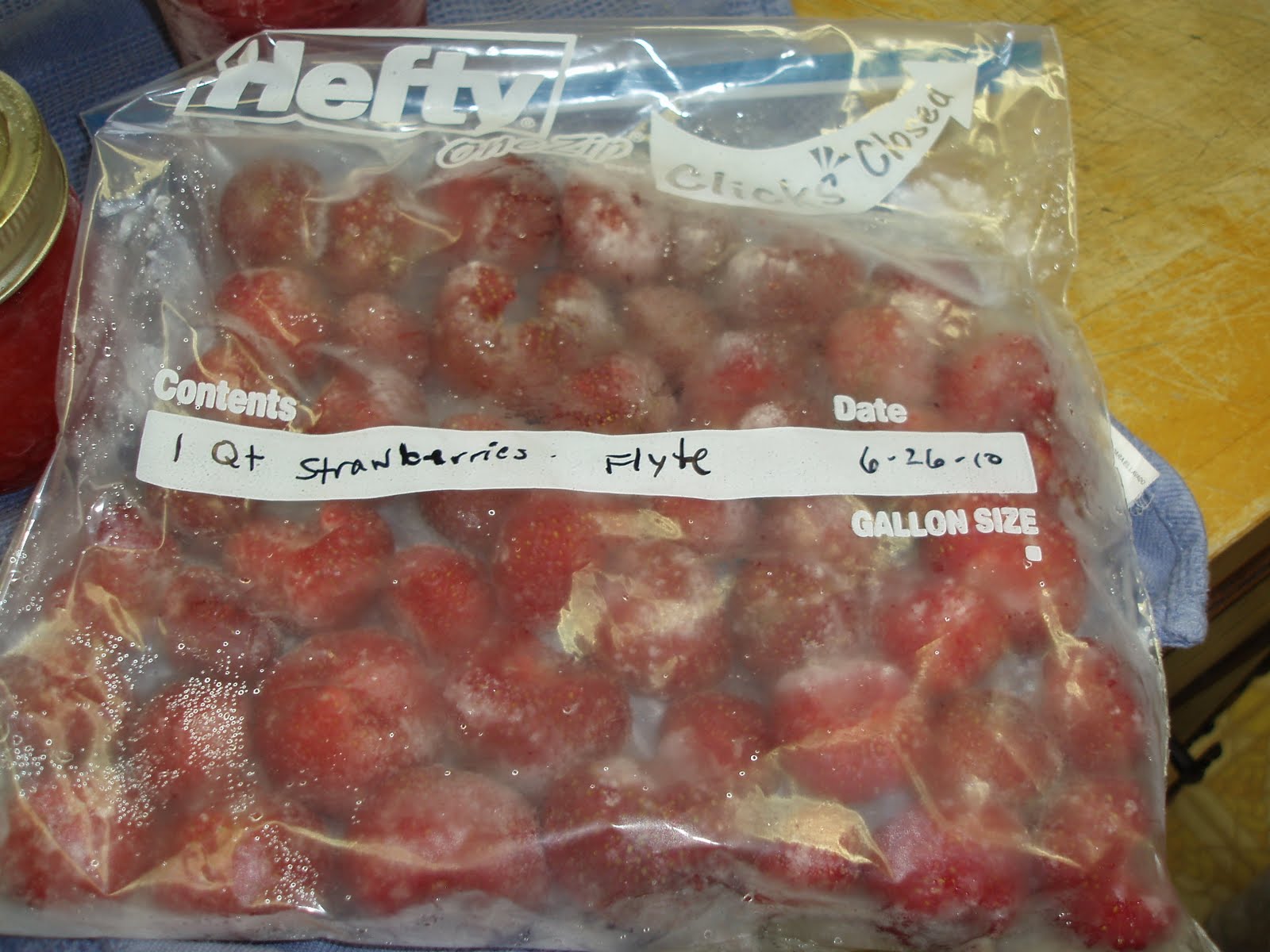
Strawberry jam (this is actually my last jar from last year's six batches - this year's jam is still at my parents' house, along with the top layer of my wedding cake, which Michael is still intending to eat on our anniversary), whole strawberries, mashed strawberries with a little sugar (I bought eight quarts of berries from a farm stand in town after we got back from our honeymoon- my mom couldn't believe they still had berries on the 26th), peas, peas, and more peas. Not shown: two pounds of asparagus and big plans for the rest of the summer!

Tuesday, March 30, 2010

Keeping Busy (With Adele Pictures!)

On January 21st I handed my "Student Teacher" badge to the secretary at Ripon High School and made the official transition from being a student to being . . . unemployed. I headed over to a bank to have my application for a teaching license notarized, went to Ripon College to hand in my paperwork, and presumably felt some kind of weight lift off my shoulders, except that I knew I was in for another six to eight-week wait while the Education Department at Ripon reviewed my paperwork, and the DPI reviewed my request for a license.

Instead of doing anything productive like applying for substitute teaching jobs, I spent the first day of the rest of my life driving to Indiana to celebrate my niece's second birthday. (I couldn't actually apply for substitute teaching jobs anyway, because in the current economy schools are only hiring actual certified teachers to sub, and I was waiting for a letter from the Ed Department stating that my license application was pending at the DPI and that Ripon College would vouch for me if an employer was willing to take their word for it.)

Eventually the letter arrived, but I'd already gotten busy with Buechner Tax Prep, which has managed to keep my head above water for the last three years. (It is a little bit annoying to work for your dad though - my last three paid jobs have put me under the direct supervision of my immediate family, which probably looks strange on job applications. As much as I don't mind doing taxes, and enjoyed working as a kindergarten assistant, it sure would be nice if someone not related to me would hire me for a change!)

In addition to trying to supplement my family's income, I've been having fun with new cookbooks. Yay for wedding gifts!

Good Food?
Here are some of the things I've made:


Chicken dinner - with a pasture-raised chicken from Jordanal Farms, real mashed potatoes, and my first try at making the gravy I grew up on.


Blueberry cream scones, which might make it unnecessary for me to ever visit another coffee shop again . . .
Michael and I had some friends over for steak from the local "chop shop" which, unfortunately, sells only commercially raised, corn-fed beef. I think this was probably the first time I'd ever made steak at all, and it turned out pretty good, except that the wild rice I wanted to try burned to a crisp. (I followed the instructions very carefully, including the mandate not to open the lid during the 50 minutes of simmering, and almost lost my good pan in the process. The next time I made the rice, I checked on it frequently, cut the cooking time in half, and managed to serve it for dinner, but still wasn't particularly wild about the results.)

Good Books
In addition to enjoying my kitchen, I have been doing a lot of reading. (Surprise, surprise.) I joined a book club at a local book store, and so far have read four books I would probably never have picked up otherwise. (Ella Minnow Pea, The Girl with the Dragon Tattoo, The Help, and Water for Elephants.) A member of that book club mentioned a different book club - at the library - so I read The Gurnsey Literary and Potato Peel Pie Society, which I'd been hearing about - and which was also really good. I also re-read several of my old favorite Jane Austen novels, and after finding a long-lost box of favorite books from my childhood in a bedroom closet at my parents' house, I am on my way to re-reading all of the Anne of Green Gables books, and have already completed the Emily books by L.M. Montgomery. They're still good. Which is good, because I already sent a boxed set to Adele.

Good Food and Books
Over winter break, instead of spending my entire week-long vacation picking up nuggets of wisdom such as "being courageous is a high-quality fixation" from sophomore essays defining abstract terms, or pulling my hair out because seniors still can't figure out how to support their ideas about Edgar Allen Poe with quotations from the text, I read In Defense of Food by Michael Pollan - which I had been wanting to read since last summer, when I read Animal, Vegetable, Miracle by Barbara Kingsolver, especially since there was a controversy in Madison about whether Michael Pollan's revolutionary book about what constitutes "food" should have been distributed, free of charge, on the UW campus. I couldn't put the book down, and I haven't been able to stop thinking about food since then. Goodbye vanilla yogurt. Goodbye cereal. Goodbye cream of mushroom soup. Eventually I'll have to say goodbye to Jiff peanut butter, but we tend to stock up on that, so I still have a few jars of both creamy and crunchy. Some things are not so difficult to say goodbye to - for instance, growing up on my grandma's freezer jam, I've never been a big fan of store-bought jams and jellies. (No, I don't know what's in sure-jell, but I think it might pass Pollan's "great-grandmother" test.)

Intermission
Last week, I thought it would be a great time to go to Indiana to see the world's cutest tw0-year old. (The best thing about this eighth wonder of the world is that admission is totally free to aunts and grandmothers, as long as we're willing to put up with the seven-hour drive and the in-law.)
Showing "Untal Mital" that she loves fruit snacks as much as he does!
Walking Tuh-Tee with Aunt Dee-Dee and MeMaw.
Adele is very good at playing I-Spy, and loves to show off her yellow daffodil.

She's less good at choosing appropriate clothing for the weather - we had trouble convincing her that it was too cold for short sleeves! (At least we got rid of the light purple pants "matched" with the red-and-white striped shirt.)
In spite of my recipe for excellent scones, I still love coffee-shop lattes - and I think it is really cute to take Adele to Starbucks. (I'll have to enjoy it while it lasts. I'm pretty sure I won't be shopping at Starbucks for much longer.) I like to say "ahh" after a sip of coffee, and Adele has been imitating this habit for several months now. This "ahh" was purely for the camera, though. She's a little ham!

Super Why is apparently one of Adele's favorite shows (but we didn't watch it with her so I know nothing about it). MeMaw fashioned a Super Why cape out of Adele's bumpy blankie and a clothespin.
Adele has a huge imagination. She got a Barbie tent for her birthday, but she realized that she could also make a tent out of a blanket and a chair. She called that her "chair tent." Then she took the blanket off of the chair, to find more places to build a tent. Too cute!
"No, No, Dee-Dee." The bumps go on the inside of the blanket. Good thing MeMaw was there to comfort Adele after I mistakenly covered her up the wrong way when she was trying to wake up from a long nap!
More "Ah-Busss" after the bookshop on Saturday, before MeMaw and Aunt DeeDee headed out. This time Adele picked "to-tat milt" instead of strawberry.

Preaching
Of course, by necessity, I missed two few and far-between opportunities for substitute teaching jobs while in Indiana, and delayed the processing of my application to substitute teach in Portage by a week, but the trip was worthwhile. In addition to playing with Adele for four days, we watched Food, Inc. My mom (who has been reading my ever-growing stack of books about the slow food movement) and I were pretty interested. Oddly, I'd picked up a library book for the trip, and since there is a long waiting list for the library's 53 copies of The Omnivore's Dilemma I picked up Eric Schlosser's Chew on This as a substitute.(And I packed Wisconsin cheese and sausage to eat in the car.) Food, Inc. was my first introduction to Eric Schlosser, and I though it was very good luck that I happened to have his book handy. I read it in less than 24 hours after watching Food, Inc. (Yay long naps!) Then, on Saturday, the girls ventured out to Mudsocks, a fun independent bookstore near Adele's house, and I picked up my very own copy of The Omnivore's Dilemma. Since I also picked up some Sandra Boynton books for the little kids I love, I decided to skip Food Rules for now. (The Omnivore's Dilemma is a much bigger book, so it promised to be more satisfying. Four days later, I'm still not finished (but I only got to read about five pages yesterday).

The Shopper's Dilemma
In Animal, Vegetable, Miracle Kingsolver essentially says that sometimes it is better not to buy organic food. For on thing, some people are organic farmers, but because of bureaucratic red tape they can't get the official label. For another thing, organic food - even sustainably grown organic food - may have been shipped thousands of miles to make it to my grocery store. So I had been feeling pretty decent about spending a few more cents to buy the Kemps milk - which says it is from Wisconsin - instead of the store brand. I didn't think it was worth checking out the organic milk options. Plus, I heard Michael Pollan say, on a radio program last week, that he tries to stay away from ultra-pasteurized milk products, even if they are organic. So yesterday I stood in the dairy section of our small-chain grocery store contemplating the options. I could buy IGA milk but wouldn't, because it probably came from California. (At least even that milk claimed to be rBGH free.) I could buy the Kemp's, knowing that the milk was rBGH free, and it was from Wisconsin cows. But then I looked at the organic milk because what I really wanted to drink was cow milk, not corn-milk. I was looking for grass-fed dairy cows. Pierce's had three different brands of organic milk. I wasn't planning to blog about it, so I didn't take any extensive notes on the brand names, prices, or product descriptions, but two of them looked kind of fishy to me. All three were ultra-pasteurized, so if I decided to go organic, I guess I'd have to compromise on the amount of processing that had gone into the finished product. (As I write, the a Wisconsin State Assembly committee is voting on a bill that would allow raw milk sales for a certain amount of time, under some serious restrictions - I am keeping my fingers crossed for this one!) Two of the cartons said nothing about the life of the cow, but promised to come from "family farms." This is what Michael Pollan calls the literary genre of "supermarket pastoral." (I think I may try to add this genre to my English curriculum.) When customers see phrases like "family farm" they think of a happy place where cows do what cows are supposed to do - much happily on hay and clover, with lots of lush green pastures surrounding a neat red farmhouse. In reality, this could be a place where cows are tethered to milking machines, fed a liquid diet of organic corn supplemented with organic animal fat. The third carton claims to come from grass-fed cows. The package is mostly green and contains what appears to be a photograph of cows in a pasture of short green grass. Their website is listed on the carton - www.grasspoint.com, and it has some information about their farming practices, but I'm starting to think that in order for farmers to raise animals and vegetables sustainably, there can't be a distributor in the middle. Grass Point can't say exactly which retailers sell their products, because that is at the discretion of the distributor. Maybe if this little bill working its way through the Wisconsin legislature becomes a law, I can head to the farm buy the milk directly from Chad at Grass Point. (Until then, pending Michael's taste test, I'll probably keep getting Grass Point milk from Pierce's.)
I also had to buy eggs for Easter, and ended up with Phil's cage-free eggs. (The accompanying Supermarket Pastoral text claims that these eggs were laid in nests. I'm more interested in what the hens are being fed . . .)
Before . . .
(we didn't have any Kemp's milk left in the fridge)
After . . .

For a while last fall I was buying Amish eggs, because I drove through Amish country every day. I always found it a little bit awkward to do business with the egg lady, because I wasn't sure just how such things were supposed to be done. The first time I stopped, there was another car taking up the entire driveway - and then a buggy had to get between my car and the other shopper's. The next time I actually asked the lady where their customers usually parked - she said around back, but I couldn't really tell what she was talking about. The next time, I parked behind another car, and a tiny little kid brought me my eggs. But then I discovered a faster way to get home, and stopped driving past this particular farm, even on nights when I left school before dark.

Choices
Open on my computer, in tabs next to Blogger, are sign-up forms for two CSAs. Michael and I will probably join a CSA this year. There are two relatively nearby which I am interested in. Their selection is smaller, one is not certified organic (but that doesn't bother me, because both offer opportunities to tour the farms and see how my food is being grown). There is a third option, a much larger CSA, which has its own farms, but also gets produce from around the world (or wherever they grow kiwi, pineapple, and guava) for their separate "fruit share." The reason I'm considering this CSA, in addition to the fact that some of our friends use this CSA, is that they also have coffee and cheese shares. The cheese is probably local. The coffee, of course, is not, although it is roasted in Wisconsin, the day before it is shipped.

As I continue to enlighten myself through about food, I feel a big civic and environmental responsibility in deciding where to buy my vegetables and meat this spring and summer. I could go to the farm market that will pop up sometime this spring in the Culver's parking lot. I like the man who mans the cash register. I could drive to local farmers' markets on various days of the week - but I don't always trust them. I could join a local CSA or I could join the large one that ships all the way to Minneapolis. (It is funny to think about food this way - it is very easy for Michael and me to go to Minneapolis for the weekend - it isn't all that far, but it certainly isn't local.) If I join a local CSA, I'll have the advantage of being able to walk around the farm and see how they grow their crops. But I'll never know what's coming in my weekly 0r bi-weekly box (choices, choices) and what if I can't figure out a good way to cook kohlrabi? And which one should I pick? Should I base my decision on cost? High or low? Proximity? I could get over my shyness of the Amish and drive to their farms this summer . . . but would I really be able to commit to that? Or would I find myself driving to the grocery store to pick up garlic or onions or tomatoes or basil because I "need" it to make tonight's dinner?

So many things to think about . . .

In addition to thinking too much about food [yesterday my mom and I headed to a local shop to check out their cheese, veggies, and meat - on our way out the door my dad called, "Katie won't be able to find anything to eat there" and he was pretty much right. Okay, so my mom bought me some "vegetarian" "Amish" chicken legs (I'm not sure this is all that great for the chickens, since they eat bugs and grubs and stuff . . .) and some blue cheese that looks promising, and some plums (from Chile), and I shared their Peruvian asparagus for lunch . . . but I'm not sure anything in the store could have withstood Michael Pollan's critical eye] I've been trying to do a little scrapbooking between tax returns.

Scrapbooking
My mom whips up pages of Adele in seconds (and in about an hour yesterday whipped up a substantial portion of a baby quilt for Anna Kate) but making my wedding scrapbook has become quite the process. (More overthinking, probably.) Should I put in, for example, the receipt from the Tux rental place? The business card of our minister? Or should I stick to pictures? Can I even find all the pictures I know were taken? I've glued down four pages, and have about four more "in the works" right now . . .

Picture of a scrapbook page with pictures of making place cards . . . and my scrapbooking mess!

Almost-finished Goody Bags page
Making the programs page, and more of my scrapbooking mess!


I'm trying to make a comparison between Cinderella's magical pumpkin carriage, my Princess day, and our limo . . . I thought this pumpkin paper was perfect, but the page still needs a little bibbity-bobbity-boo.